A 10-month-old infant planned for craniosynostosis repair was given IV tranexamic acid prophylactically after induction. Which of the following statements regarding antifibrinolytic therapy is most accurate? - Answer & Explanation
- TXA promotes clot formation by activating thrombin pathways
- TXA significantly increases thromboembolic risk in children undergoing surgery
- High-dose TXA is associated with seizures due to structural similarity to glycine ✓ Correct Answer
- TXA competitively binds to fibrin and inhibits fibrinolysis
Explanation:
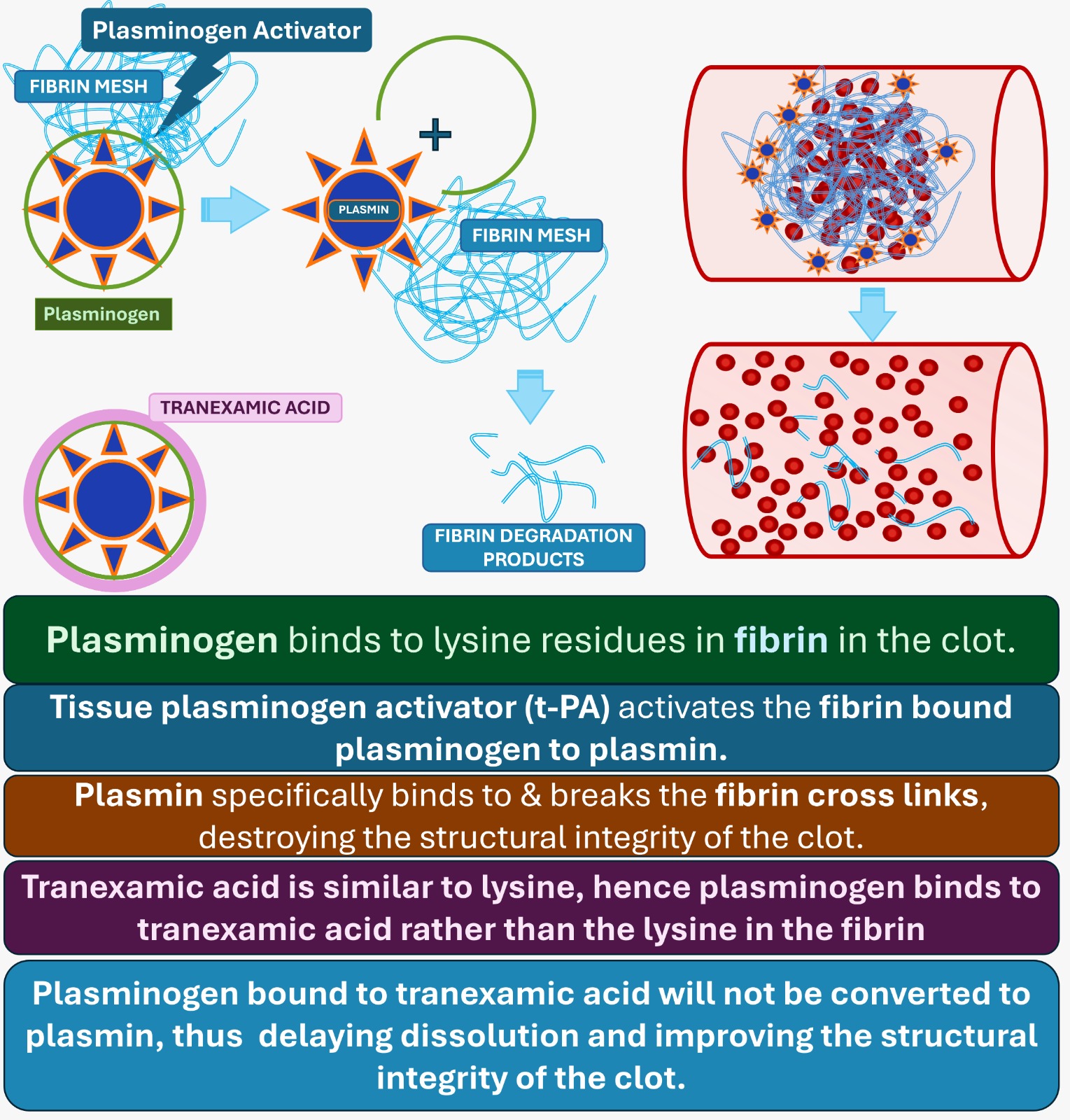
Tranexamic acid (TXA) is an antifibrinolytic drug that inhibits plasminogen activation, preventing fibrinolysis and making it a key therapeutic choice in controlling bleeding. It is indicated for the reduction of blood loss and the subsequent need for blood transfusion during or while expecting major or moderate bleeding. Tranexamic acid does not activate the thrombin pathway. It inhibits fibrinolysis and enables clot stabilisation rather than clot formation. Largescale meta-analyses and randomized controlled trials have not demonstrated a statistically significant increase in thromboembolic events. Tranexamic acid does not bind to fibrin. Hence option A, B & D are incorrect. Option C is correct. Tranexamic acid in high doses can act on neuronal inhibitory circuits due to its structural similarity to glycine leading to seizures. GABA receptors and Glutamate receptors are implicated as well. References 1. Goobie S, Faraoni D, Perioperative paediatric patient blood management: a narrative review, British Journal of Anaesthesia, 2024; 134, 168-179 2. Alsabri M, Aziz MM, Fahmy K, Zayed A, Elkefl MT, Ebraheem EA, Nabawy MS. Tranexamic Acid in Pediatric Care: A Comprehensive Overview. J Pediatr Pharmacol Ther. 2026 Feb;31(1):18-29. doi: 10.5863/JPPT-25-00027. Epub 2026 Feb 9. PMID: 41675472; PMCID: PMC12889008. 3. Lecker, I., Wang, D.-S., Whissell, P.D., Avramescu, S., Mazer, C.D. and Orser, B.A. (2016), Tranexamic acid–associated seizures: Causes and treatment. Ann Neurol., 79: 18-26. https://doi.org/10.1002/ana.24558 4. Zhang Lin, Zou Xiaoyi, Tranexamic acid-associated seizures: A meta-analysis, Seizure, Volume 36, 2016, Pages 70-73, ISSN 1059-1311, https://doi.org/10.1016/j.seizure.2016.02.011.